00
hrs
:
00
min
:
00
sec
for delivery on
★
Free over £60
If you cancel, all changes will be lost and the original order will remain unchanged.

Monitoring blood pressure is a crucial aspect of maintaining good health, especially in today's fast-paced world where stress and lifestyle factors can significantly impact cardiovascular well-being.
OMRON, a leading brand in the field of healthcare technology, has garnered a reputation for producing reliable and innovative blood pressure monitors. OMRON continues to set the standard in home blood pressure monitoring, helping millions of users worldwide take control of their cardiovascular health. With a range of models tailored to meet various needs, choosing the right OMRON blood pressure monitor can be a daunting task.
In this blog, we will compare four popular OMRON M range models – M7 Intelli IT, M6 Comfort AFib, M2+, and M2 Intelli IT – to help you understand their features, pros, and cons, and ultimately determine which model is the best fit for your specific requirements.
Selecting the right blood pressure monitor involves considering several key factors to ensure it meets your needs effectively. Here are the essential criteria to keep in mind:
By considering these factors, you can choose a blood pressure monitor that fits your lifestyle and health needs, ensuring you have a reliable tool for managing your cardiovascular health. OMRON offers a range of models that meet these criteria, providing options for various preferences and budgets.
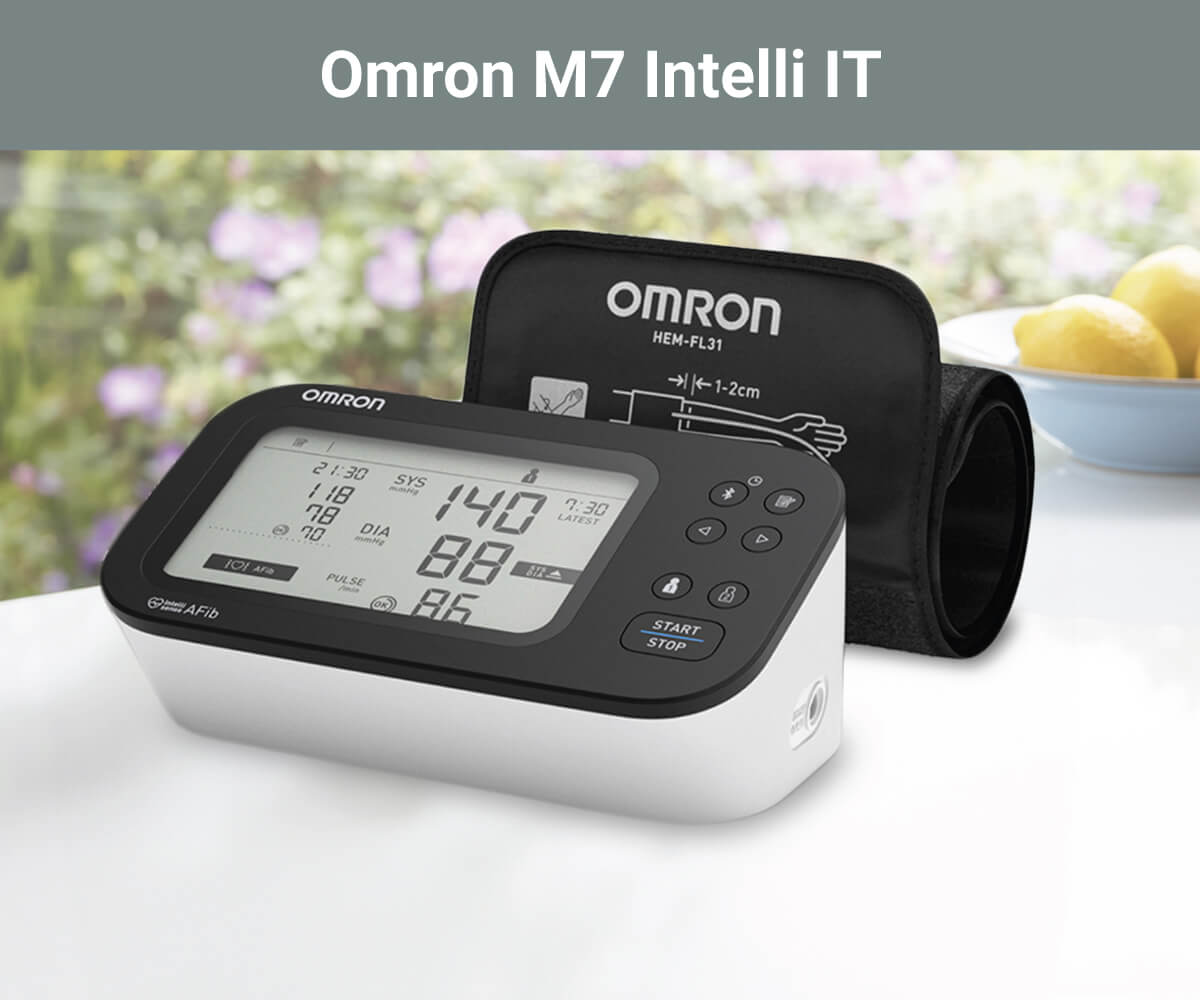
The M7 Intelli IT is a clinically validated, Bluetooth-enabled blood pressure monitor that detects the possibility of Atrial fibrillation (AFib). The monitor can highlight potential Atrial fibrillation (AFib), an often undetected condition that can lead to a higher risk for stroke and embolism. With this particular model, you can automatically update your latest results to your smartphone by Bluetooth and have your blood pressure readings at your fingertips through the Omron connect app.
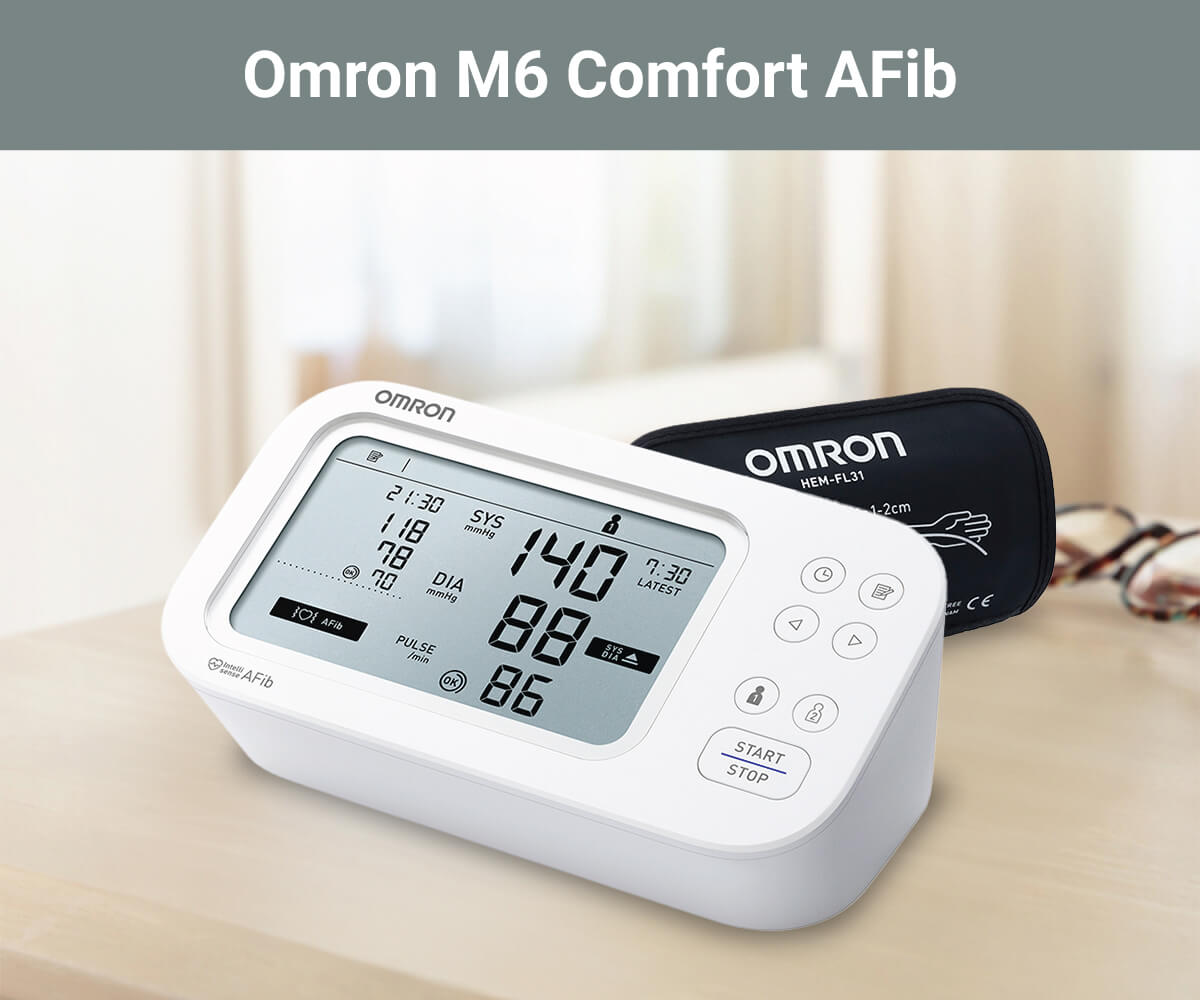
The OMRON M6 Comfort is a professional-grade line that comes with the Intelli Wrap Cuff - an easy way to get accurate results. It detects the possibility of Atrial fibrillation, enabling home monitoring of the condition and giving you peace of mind. It also takes 3 consecutive readings at 30 second intervals, then displays the average to give you a more accurate indication of your blood pressure.
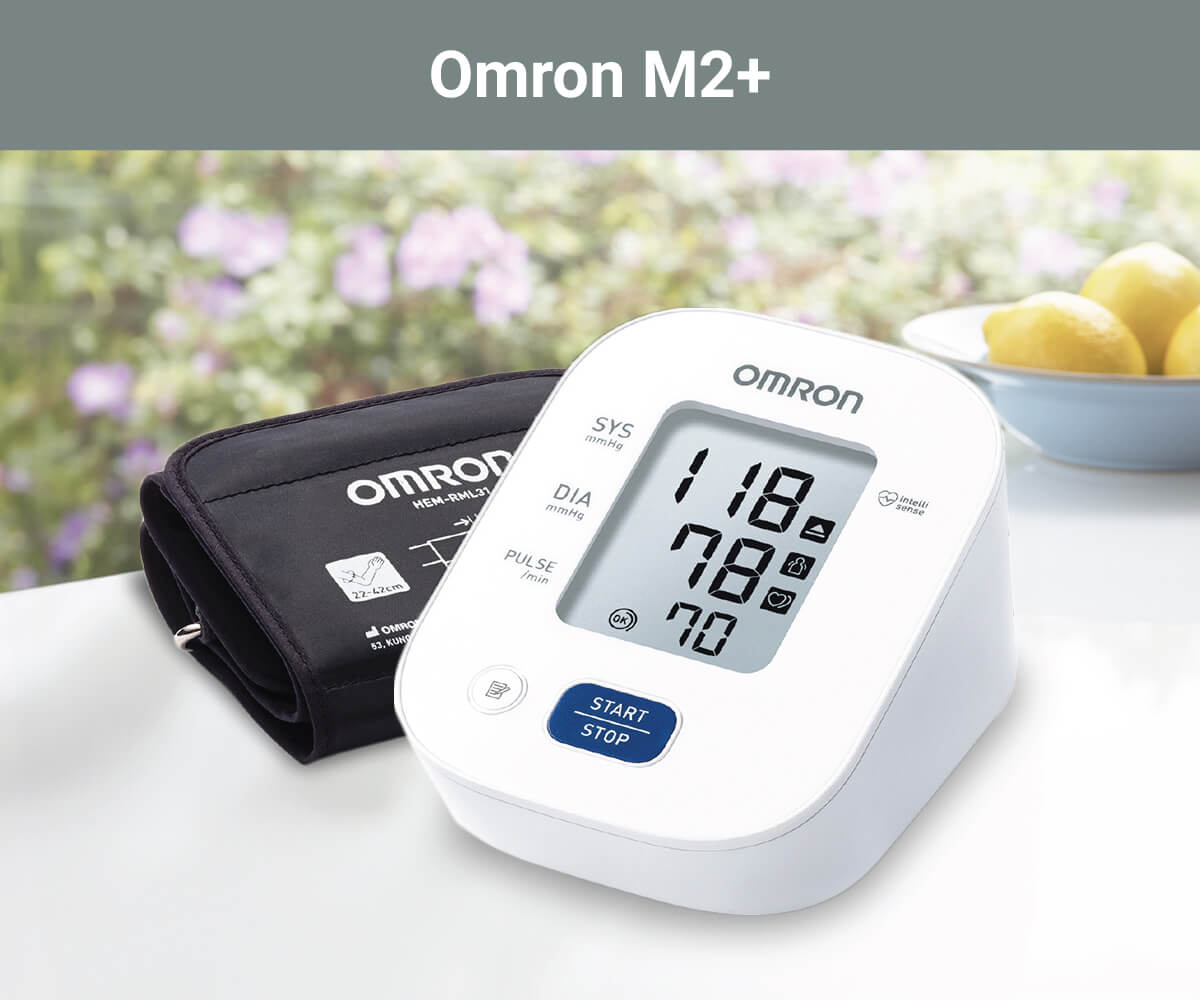
OMRON M2+ is a clinically validated upper arm blood pressure monitor that gives you accurate readings at home. OMRON M2+ has unique OMRON Intellisense™ Technology which automatically applies the right amount of pressure, preventing discomfort caused by overinflation of the cuff. It stores up to 30 readings for your review. This makes it easy for you to share vital information with your family, caregivers, or healthcare professionals.
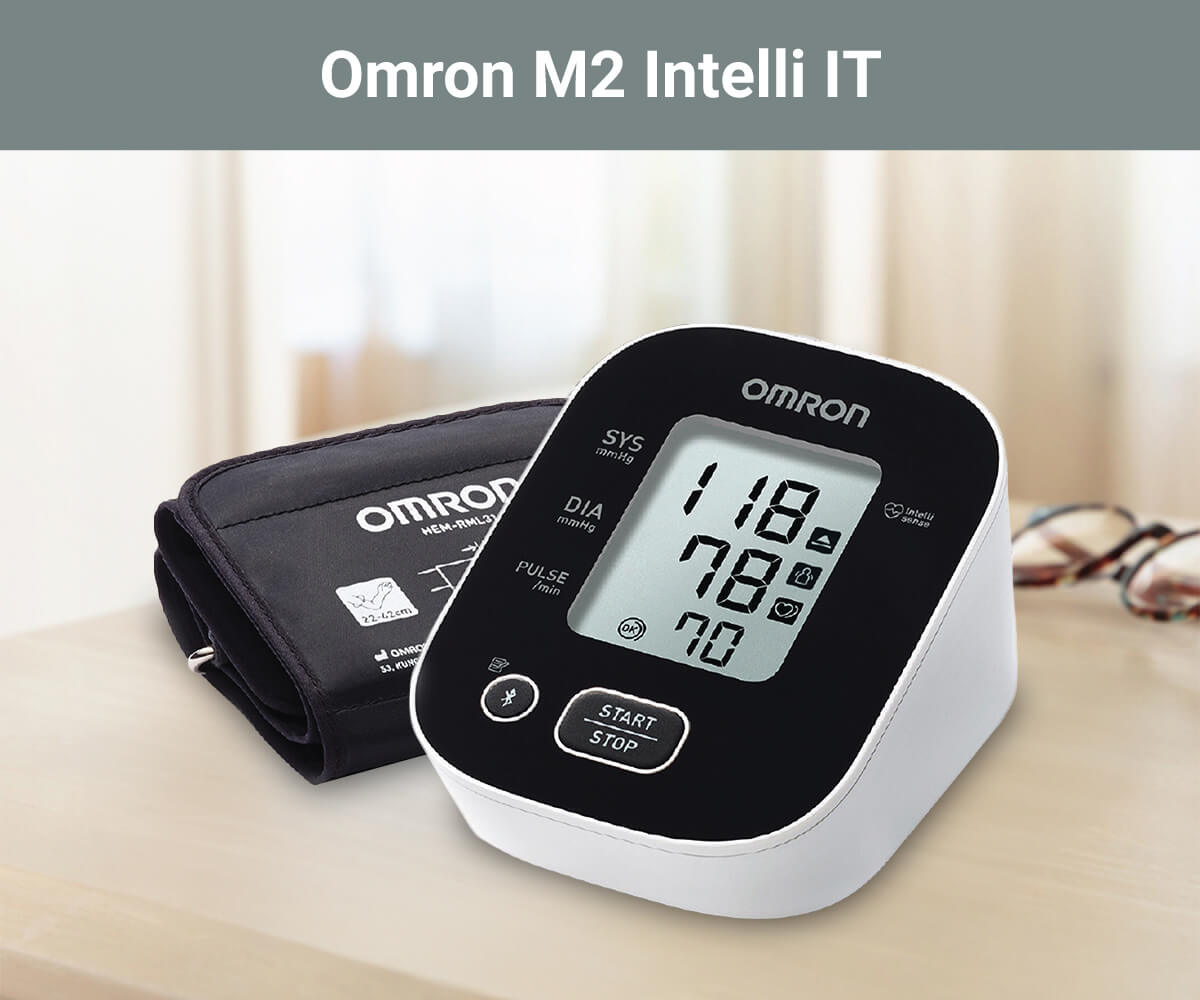
The M2 Intelli IT (2024 Model) from OMRON makes tracking over time reliable and accurate blood pressure measurements even easier. All it takes is to put the cuff in position, press “Start” and the device will take a blood pressure reading and automatically store the result in the OMRON connect app. Ready to share with your doctor.
If you're weighing up brands, Omron is the name you'll see most often in clinics, in pharmacies and in independent reviews. There's a reason for that.
Omron has specialised in home blood pressure monitoring for more than fifty years, and it's widely recommended by clinicians and pharmacists.
What matters more than any slogan is the independent record.
Many Omron monitors appear on the validated device lists kept by bodies like the British and Irish Hypertension Society and the international STRIDE BP initiative.
Most monitors on sale never go through that testing, which is what sets Omron apart for an everyday buyer.
The next section explains what that validation involves and why it's worth looking for.
You'll see the words clinically validated on this page and across our Omron range, so it's worth knowing what they stand for.
A validated monitor has been tested against a reference reading in a formal study, following a protocol such as the AAMI/ESH/ISO Universal Standard.
If its readings stay within the margin that standard allows, the device can be added to a list of validated monitors.
Those lists are kept by independent bodies, not by the manufacturer. This matters more than most buyers realise.
Research suggests fewer than a quarter of the home monitors sold worldwide have passed this testing, and an unvalidated monitor can read high or low without giving any sign.
Your numbers may shape decisions about medication, so accuracy is not a detail.
The Stroke Association and groups like the British and Irish Hypertension Society both point people towards validated devices for this reason.
The STRIDE BP and BIHS lists are free to search if you ever want to check a specific model.
Some of the monitors above, like the M6 Comfort and the M7 Intelli IT, can screen for atrial fibrillation while they take your reading. It helps to know why that feature is there.
Atrial fibrillation, or AFib, is the most common heart rhythm problem.
It causes an irregular heartbeat, and it can let blood pool and form a clot that travels to the brain.
The Stroke Association notes that AFib makes a person around five times more likely to have a stroke, and that these strokes tend to be more serious.
The catch is that AFib often causes no symptoms, so many people live with it without knowing.
That's where a screening monitor earns its place.
When a reading suggests the rhythm may be irregular, the monitor flags it so you can mention it to your GP.
It doesn't diagnose anything on its own, and you shouldn't act on the flag alone.
What it does is turn an everyday home check into a prompt to have your heart looked at.
That prompt can lead to treatment and a lower stroke risk.
Yes, when you use a validated model correctly. Many Omron monitors have passed independent accuracy testing and appear on the STRIDE BP and BIHS validated device lists. Your technique matters too, so sitting calmly and using the right cuff size both affect the reading.
It's one of the most established. Omron has focused on home blood pressure monitoring for over fifty years and is widely recommended by clinicians and pharmacists. The signal that matters more for most buyers is that its monitors keep passing independent validation, which most monitors on sale never go through.
For most people, an upper arm monitor is the safer choice, since that style tends to give the more reliable reading and is the one validation bodies prefer. A wrist monitor suits anyone who finds an arm cuff awkward or wants something compact to travel with. If accuracy is your main concern, start with the upper arm.
It depends on what you need. The M2 Intelli IT covers everyday readings at a fair price. The M7 Intelli IT adds AFib screening and app connectivity. The M2+ keeps things simple for anyone who just wants the numbers. The comparison above shows where each one fits.
Sit with your back supported and both feet flat on the floor, and rest for five minutes first. Keep the cuff on a bare upper arm at heart height, then stay still and don't talk while it measures. Avoid caffeine, exercise and smoking in the half hour before, and take your reading at a consistent time each day so the results line up.
Several do. Models such as the M6 Comfort and the M7 Intelli IT screen for atrial fibrillation, and many others flag an irregular heartbeat during a reading. Treat any alert as a prompt to speak to your GP rather than a diagnosis.
Yes. Monitors with Bluetooth save each reading to the free Omron Connect app, which builds a history you can show at an appointment or send ahead of one. Even on a simple model you can note the numbers by hand. A record over a couple of weeks tells your GP far more than a single reading.
Once you have a sense of which model suits you, you can browse our full Omron blood pressure monitor range to see prices and check what's in stock.